Bonsai Harmony on YouTube

Bonsai Harmony on Youtube!

Hey everyone, if you haven’t seen yet, I have started a YouTube channel where you can follow along with work that I perform at Kouka-en. Videos will typically be shot over the shoulder or close up and you can follow along as if you were here studying along with me. As Oyakata says “見て覚えって! – look learn!”. I’ll be providing voiceovers as I think this is best for the way things are set up in the garden. The information will be as concise and possible without straying too far from the work on screen.

I started doing videos to help myself coalesce information that I have learned at my time here in Japan and I hope it will be valuable to you as well. There’s a lot to be said about every little task in bonsai, and I could always drone on until it’s all stated. However I’ll be doing my best to keep the videos around ten minutes so you can get back to your own trees.

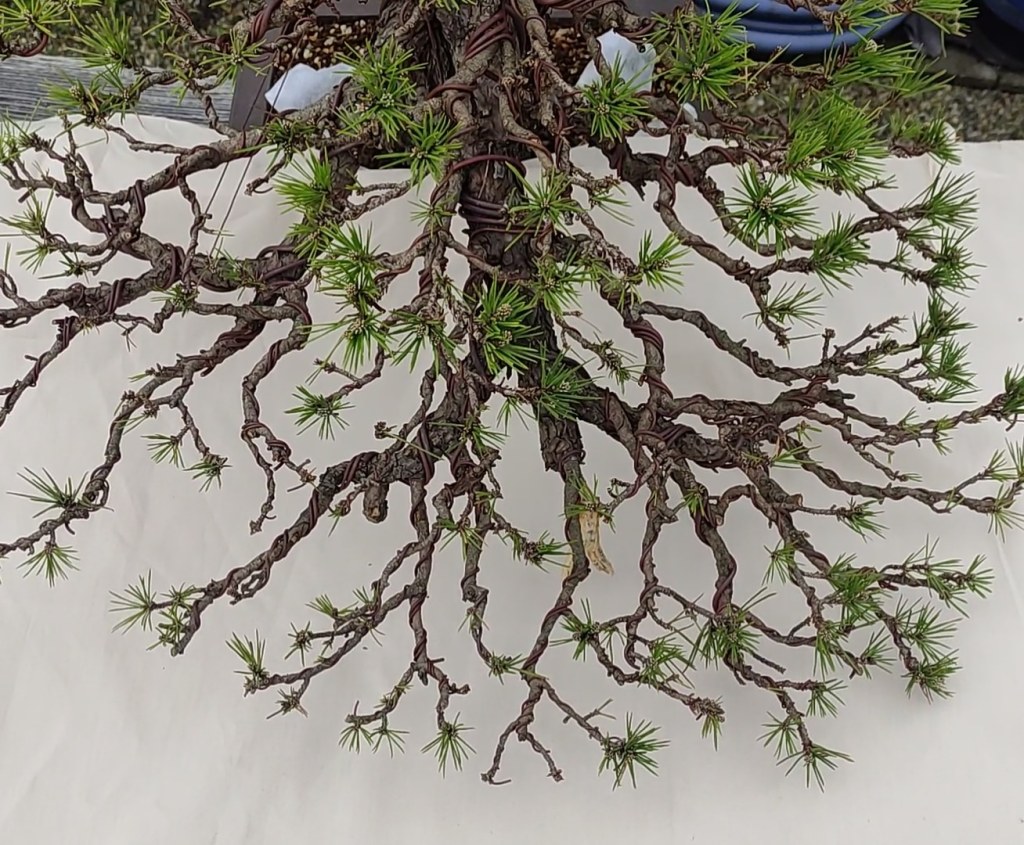
My second video is out today covering pine pad design. We stripped down a black pine for maintenance and you can see every structural detail of how they are grown in Japan and how you can wire a pad to be look great and last.I

Please let me know if you have any feedback, requests or suggestions so I can improve the content as much as possible.

Thank you, I hope you enjoy! The link can be found below.


Hasho, happa and How to Choose a Good Leaf Type

Hasho, happa and How to Choose a Good Leaf Type


With so many variables to consider choosing a bonsai, it can be easy to overlook certain features which will help define a tree as it ages. Leaf type is one of these features and I’d like to share my thoughts on its importance and some tips on how to assess desirable qualities.

Perhaps you’ve run into a situation where the leaves on your tree still look out of proportion. The roots are finely ramified, you’ve dialed in your fertilization, and perfected timing of seasonal maintenance but the leaves aren’t the size you’d like; the design feels impossible to retain. It may be the case that your tree’s foliage size will not reduce significantly from training.

Leaf type, “Hasho [葉性]” in Japanese, refers to foliage characteristics. Even amongst single cultivars (unless propagated by cuttings) leaf type is as unique as a fingerprint and varies more with certain species. Nuances such as color, shape, internode and petiole length, bud behavior, coarseness, size, firmness, growth rate and hardiness are all qualities that vary within a species. It is generally difficult to improve these features so it is important to fully evaluate them before purchasing a tree. That being said, don’t be so picky that you end up with nothing.

Happa [葉っぱ] in Japanese refers to both leaves and needles.

Conifers

Generally, good leaf/needle features for conifers are said to be short, straight, and bright. With pines, selection is fairly straight forward and mostly requires choosing a species that back buds easily. Double flush pines such as black and red pines can have their needle size managed effectively using several methods including varying the timing of decandling in summer. For demonstration purposes I will cover various types of juniper foliage from around Kouka-en.

Junipers

For Junipers I feel that leaf type becomes more important around shohin and chuhin sizes and there is a little more flexibility with larger trees. Granted you don’t necessarily want a tight, compact, leaf on a big tree as it tends to look unnatural. On the other hand, leggy, or floppy foliage is difficult to work with and I find it never really has a refined feeling to it. I’ll try to avoid mentioning specific varieties as that’s a whole other rabbit hole with lots of information available online.

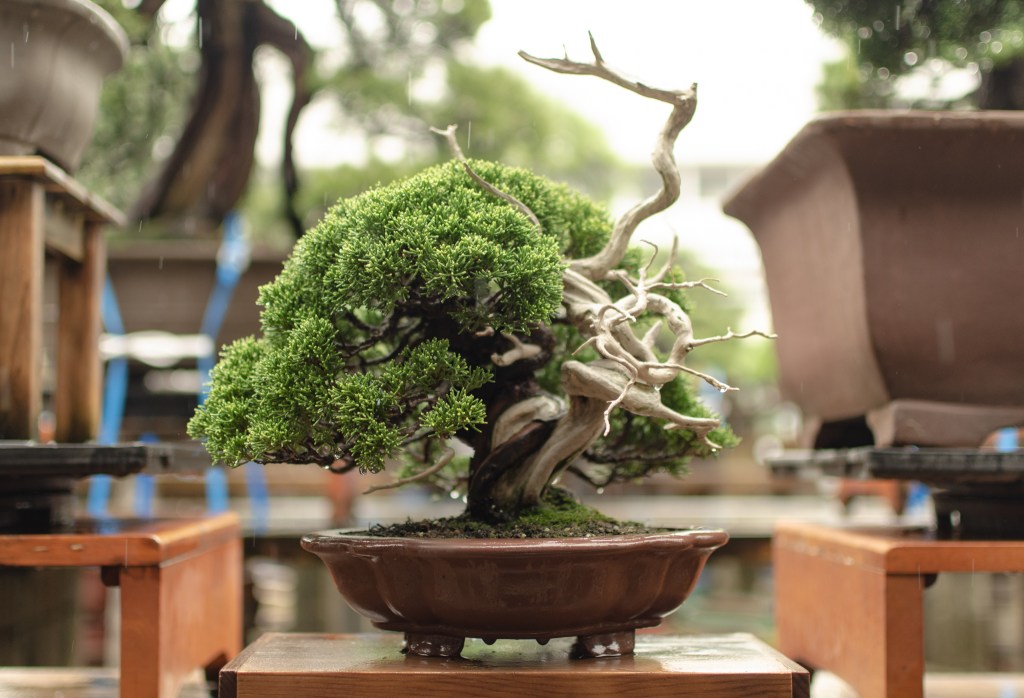
What I have found to be ideal for developing nice pads is a leaf that tends to grow flat and lateral out of the sides of the shoots. These also mound nicely once the shoot tip is cut or pinched. If you can acquire one that is like this you’ll see how the pads practically make themselves with very little maintenance. It’s easy to judge this. Just inspect a shoot or lignified section near the tip and see how the foliage protrudes from the branch.

My ideal, Laterally flat growing from shoots, short internodes.
Growing from all angles, longer internodes. Still good if the growth is firm, but requires a bit more maintenance.

Leaf texture and color comes down to personal preference (actually all of this does!). Many may agree that if you have a soft elegant trunk, a variety with a softer appearance would be best. But if you have a more rugid, masculine tree a coarse, thicker leaf may be suitable.

In Japan, where the bonsai market has matured, enthusiasts rarely have to be concerned when buying a tree as the material has been cultivated for generations and poor material is generally, grafted, sold to other markets, disposed of or burned. In the west however, in many areas people are left with the options to create material out of garden center trees, fresh yamadori or growing from seeds they may or may not know the origin of. On that note, Juniperus Chinensis or Sabina stock at the garden center in San Francisco wasn’t propagated from the same cutting as the one up north in Toronto or over in Germany.

Deciduous

Ideal leaf features for deciduous trees are considered to be small, bright and consistent, with short internodes and appear beautiful in the growing seasons. Autumn color is also considered for many species. These qualities can only be determined in certain seasons so it’s best to know a bit of the history on a tree if possible before purchasing. It’s said that a deciduous tree with the right foliage will “grow itself” meaning that it will require very little intervention with wire or anything other than basic maintenance.

Maples

For purpose of clarity I’ll use Japanese Maple (Momiji) and Trident Maples as examples.

Ishitsuki Japanese Maple grown by Fujikawa-san’s father
Soft branching with fine tips
Close up in Autumn

Left: Chuhin Ishitsuki Momiji above. Middle: Client’s large Bunjin Momiji. Right: Client’s large Arakawa (corkbark) Momiji

I find with Momiji, leaves around 4-6cm look very natural on larger trees while 4cm or less are ideal for chuhin or shohin sizes. Nice fall color is also ideal as the leaves can remain on the tree until falling. But if you enjoy mame size, then some varieties have leaves smaller than 1cm.

Kotohime Momiji in spring
Various Trident maple leaves from around Kouka-en.

Trident Maples on the other hand can often naturally have leaves as small as 2cm which looks great and is easy to maintain on all but largest specimen. Additionally nice fall color is optional as it is good to remove the outer leaves mid autumn when the tree goes dormant to ensure the interior buds are not weak on more refined trees. That being said if there is an autumn bonsai show you’d like to enter a tree into then it would be a great benefit.

It is important to consider is the size of your leaf relative to the tree. Too small foliage on a large tree may feel off due to the unnatural scale. Conversely a small tree with larger foliage will have you constantly wrestling to maintain it’s shape, though such is the case with certain species.

For fruiting and flowering species this is less important than the type of flower and fruit but a finer leaf type can help with branch development. Grafting can be used to change foliage, fruit and flower types as well but I’ll save that for another post.

Depending where you are located you may have to compromise a bit on material. But I hope this article will help you decide what you’d like to grow next. Always keep in mind what you appreciate in a tree and choose accordingly. This is not rule, just something I think is worth considering. So don’t let it stop you from acquiring or developing something new.

Daitoku-ji Bonsai Exhibit

Daitokuji Bonsai Exhibit 大徳寺芳春院盆栽園


With the world slowly returning to a somewhat normal state, I’m sure everyone is feeling some relief and planning to travel again. If you’re reading this post you’ve probably already got Japan on your list (if not, it should be). Today I’d like to add another spot for you to future visit.

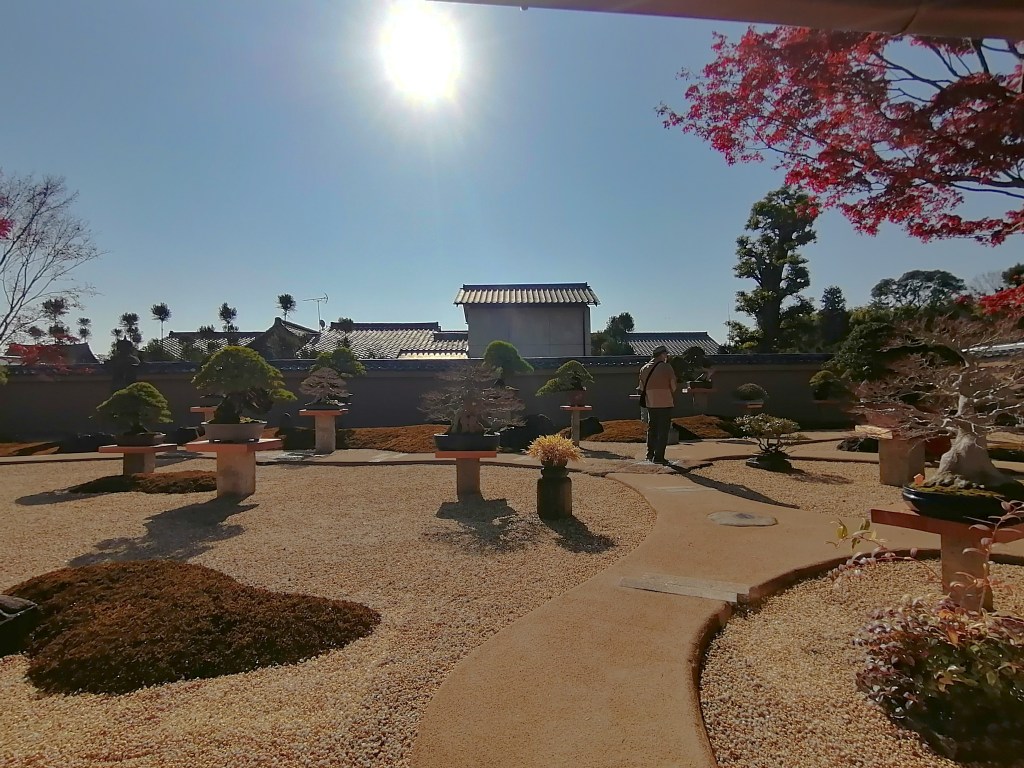
This year, Daitoku-ji, a temple complex with almost two dozen sub-temples in Northern Kyoto, has opened a permanent public bonsai museum. It hosts a monthly rotation of over 30 famous and private collection trees which you may not be able to otherwise see.

Massive five trunk Goyomatsu
風神 Fujin, a famous, imposing Shimpaku Juniper estimated a millennia old

It’s my understanding that a small plot on the north side of the temple grounds that was unused for many decades has been transformed to what is now known as Hoshunin Bonsai Garden. It’s clear that the intent of the museum is to display bonsai and suiseki in a straight forward manner for all to see and understand.

As a teaser, please enjoy a small selection of the photos I took between my two visits; the inaugural grand opening in December and again in February.

Absolute honker of a Taxus

Along with the exhibit, Daitoku-ji can be explored for almost a full day on its own with many temples and other gardens, some of which are only open a few weeks of the year, many not allowing photography. Afterwards, you are only a 15 minute walk from Kinkaku-ji, the golden pavilion.

Entry to Daisenen, founded in 1509

If you have any questions or want to know more details about the museum or bonsai in general, feel free to message me at either of the links below. I’ve withheld some information as I am not entirely privy to everyone involved with the project.

The garden is open year round but may be closed for maintenance or rotations periodically. Please 075-492-6010 prior to visiting.

Methods to ensure fruiting of Persimmon Bonsai

Methods to ensure fruiting of Persimmon Bonsai


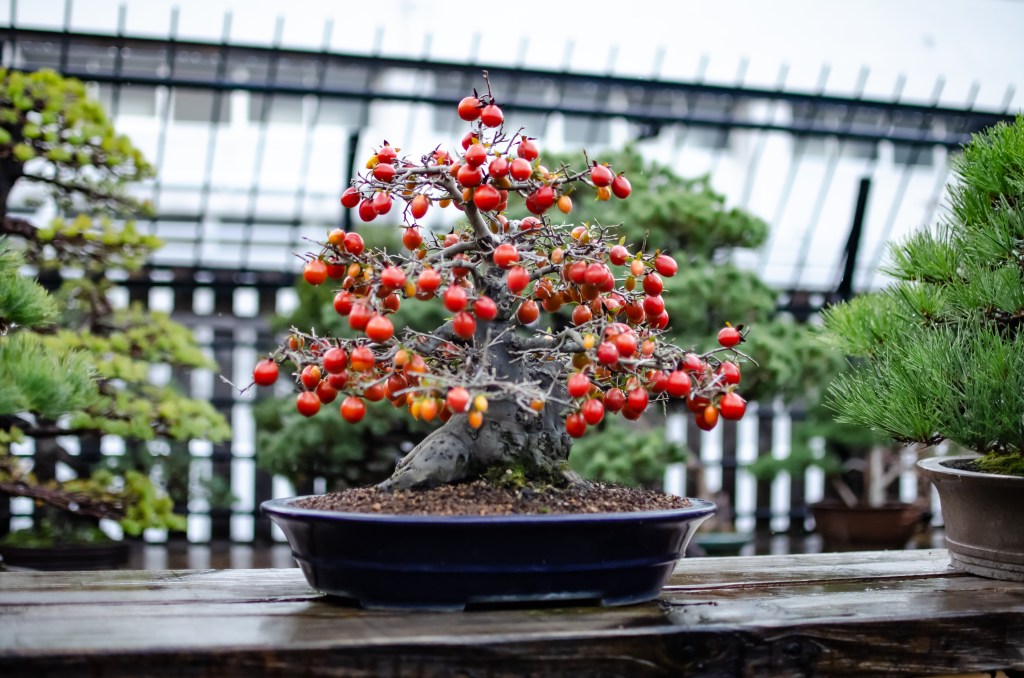
Princess Persimmon, Diospyros Rhombifolia, is one of the species I’ve grown fond of since coming to Kouka-en. It’s no surprise they are becoming more popular; the bright orange fruits bring some warmth to the cold, miserable winter months. Today’s post will help you identify the requirements of fruiting and problems you may encounter. I hope this information will help you enjoy your tree for years to come.

Persimmon at Kouka-en in 2019
My Shohin persimmon before wiring in winter 2020

Maturity and Flower Identification

The first thing to consider is the age of your tree. Persimmon will not flower until maturing around 7-10 years depending on your climate zone. If you acquired yours as a seedling you’re gonna have to wait. I don’t recommend buying these as seedlings for bonsai since they are dioecious with rare instances of being self pollinating. You won’t know if you have a male or female until it’s too late, you’re old and angry at your tree for being a boy. Only females bear fruit.

If your tree is mature, flowers sprout from larger buds, the first node of new shoots with leaves extending there after. Identifying the sex of your tree can be pretty tricky if you’re unfamiliar. The difference from the outside is that the female flower has more of a round urn shape and the calyx (the green petals behind the flower) are larger as well, though there is variation among different cultivars.

Top: Female flower, Bottom: Male flower

Flowering and Pollination

There’s a lot of points to make here but I’ll try to keep it concise. You will need both a male and female to produce fruit. There is a 2-4 day window to pollinate once the flowers have formed but the sooner the better. During this time keep your bonsai sheltered if there will be heavy rain as flowers soften when wet or can be broken off. Some of the female flowers may become fertilized by insects if the male tree is near but it isn’t a guarantee. This can be problematic as unfertilized flowers will develop fruit through parthenocarpy but most, if not all, will drop shortly after to conserve resources. Last but not least, western varieties are incapable of pollinating eastern varieties and vice verse ie: D. Virginiana cannot pollinate D. Rhombifolia.

A simple method to pollinate is to take a fine, clean, paint brush, insert it into a male flower, stir gently, picking up pollen and transporting it into a female flower. Repeat for each flower. The pollen is quite fine and difficult to see but it will be on the brush. You won’t have to wait more than a week from this point to watch the fruits start forming.

Fine tipped paint brush, cotton swap or tool of your choice can be used.
Brushing pollen into the female flower.

Low phosphorus levels have been linked to fruits dropping in garden trees. A balanced fertilizer through the growing season is recommended.

Fruits two months after pollination
After defoliation, before removing all the fruits

This year I wired my shohin persimmon to better display the fruits in the future. I left the fruits on until this point to document them at the half way point after pollination. I have since removed the fruits and defoliated and pruned to better develop the branching as well.

Gibberellic Acid

Gibberellins are growth hormones which regulate developmental processes, stimulating cell division and elongation; in this case flower and fruit development. Synthesized gibberellic acid is is commonly used among citrus farms to improve overall yield quality and reduce defects. The important part here is that this can be used to get your tree to fruit without a male plant.

While blooming, the flowers can be sprayed with diluted gibberellic acid (concentrations may vary by producer) and the fruits will be stabilized. They will still develop seedless but will be carried to ripeness and hold through as long as pollinated fruits. A side effect is that without seeds, the fruits will be smaller which isn’t such an issue with shohin or mame trees. Pollinated flowers can also be sprayed as a redundancy without consequence.

Japanese Meiji Brand Gibberellic Acid
Western brand available on Amazon

Fruit selection

Keeping your trees in good health is a priority. Thusly, it is good to thin out any extra or unnecessary fruits while they are still green, leaving a few extra in case of dropping. Vigor can be balanced by leaving an even distribution of fruits among branches. Cutting to an odd number of fruits is common practice for display.

A note about Pruning and Defoliation

Flower buds can be identified during the dormant season as significantly larger than just leaf buds with a visible sheath. On the year you want to display, do not cut flower buds. If defoliating is done too late flower buds may not fully develop on new shoots before the end of the year. This can vary among climate zones but is typically done mid to late spring. If you are defoliating to increase ramification it is also best to remove any fruits you may have to maintain energy in the branches.

Shohin Shimpaku Development

Shohin Shimpaku Development – 小品真柏の開発


For my first post I’d like to share a shohin shimpaku that i’ve been working to refine since I purchased it back at the 2020 Kokufu-ten exhibition.

Early in my apprenticeship I was hungry for new personal projects but my budget was tight. A lame little shimpaku waited at the table in front of ours asking to be haggled for. The trunk had some fun movement and decent deadwood for a young field grown tree but the flaws were clear with branches that were too long to make any sense of. It was also brought to my attention that maybe this foliage type would be less than ideal for a tree of this size. I was laughed at by my Oyakata for buying it but I had a plan to make this into a decent little shohin.

After initial styling

To solve the branching issue I applied raffia and copper wire on the trunk to bend the top junction towards the center. Each branch was wired and brought down along the sides with the intent to fertilize heavily and work with future crotch growth instead of long floppy branches which may never keep a nice shape after the wire is off. It was repotted into a larger terracotta pot and I didn’t thin out any foliage in hopes to keep it vigorous through the new year.

Early Fall 2020 after being mostly untouched for the growing season
Winter 2020

Through the growing season it was fertilized heavily and strong shoots were pinched or cut accordingly but was otherwise untouched. This resulted in new crotch growth as hoped for. I removed all the wire in winter and reassessed the tree. Many of the branches were cut back to the new growth, bye bye floppy boys. Kaya helped me pick a new front and the branches were wired to suit.

Winter 2020 styling

After cleaning out and wiring, I’m suspecting this one has secretly good foliage type – something I’ll make a post about soon. I’m gonna give it some more time to see if maybe I need to just graft or sell it but it tightened up a lot and I’m hoping with good attention this year it gets a little finer. And in part to achieve that it was repotted again into a much smaller moko pot. As suspected the roots had grown vigorously, and were able to be reduced significantly to fit it into it’s new container.

Root bound after one year
Spring 2021 in new moko container

This tree is turning out to be better than I expected, after this year I’m thinking it will fill in almost if not completely and I’ll update again if it’s looking sharp. I’m pleased that it’s turning out to be almost identical to what I had envisioned for it since the beginning, a bonsai type bonsai.

Update – Fall 2022

This is the last update for this shimpaku. The leaf became one of my favorites to work with and I regret not propagating it in the beginning. It filled out brilliantly and it sold on Japan’s Yahoo Auction for 80 000円 which helps me cover costs while living as an apprentice. But I miss it already.

Mount Daifugen

Mount Daifugen – 大普賢岳


After about a year and a half studying at Kouka-en I was finally able to go on a full day hike which turned out to be a little more treacherous than I anticipated.

Mount Daifugen sits about a two hour drive South West of Osaka on the edge of the Nara Prefecture. It is the second highest peak in Kansai (1780m) only rivaled by Mount Hakkyo (1915m). It also neighbours Mount Sanjo, a holy pilgrimage site with three “tests of courage” and a ban on women for the last 1300 years, how courageous.

Daifugendake relative to Osaka – 2 hours by car

To call this hike in winter dangerous would be an understatement. Looking back at this run last February I can’t help but laugh at how underprepared I was. It started with having to skillfully execute my 50 horsepower, summer tire rental Daihatsu Mirai K-car with no insurance up the last leg of the snow covered road sideways in reverse to lock wheels and get the necessary grip while praying I don’t slide off the side of this rock in the middle of the night. I also decided to rock my two year old Merrell hiking shoes that have been my dailies since coming to japan as I can’t find shoes that fit and as a result are quite smooth on the bottom.

Base Camp of Daifugen

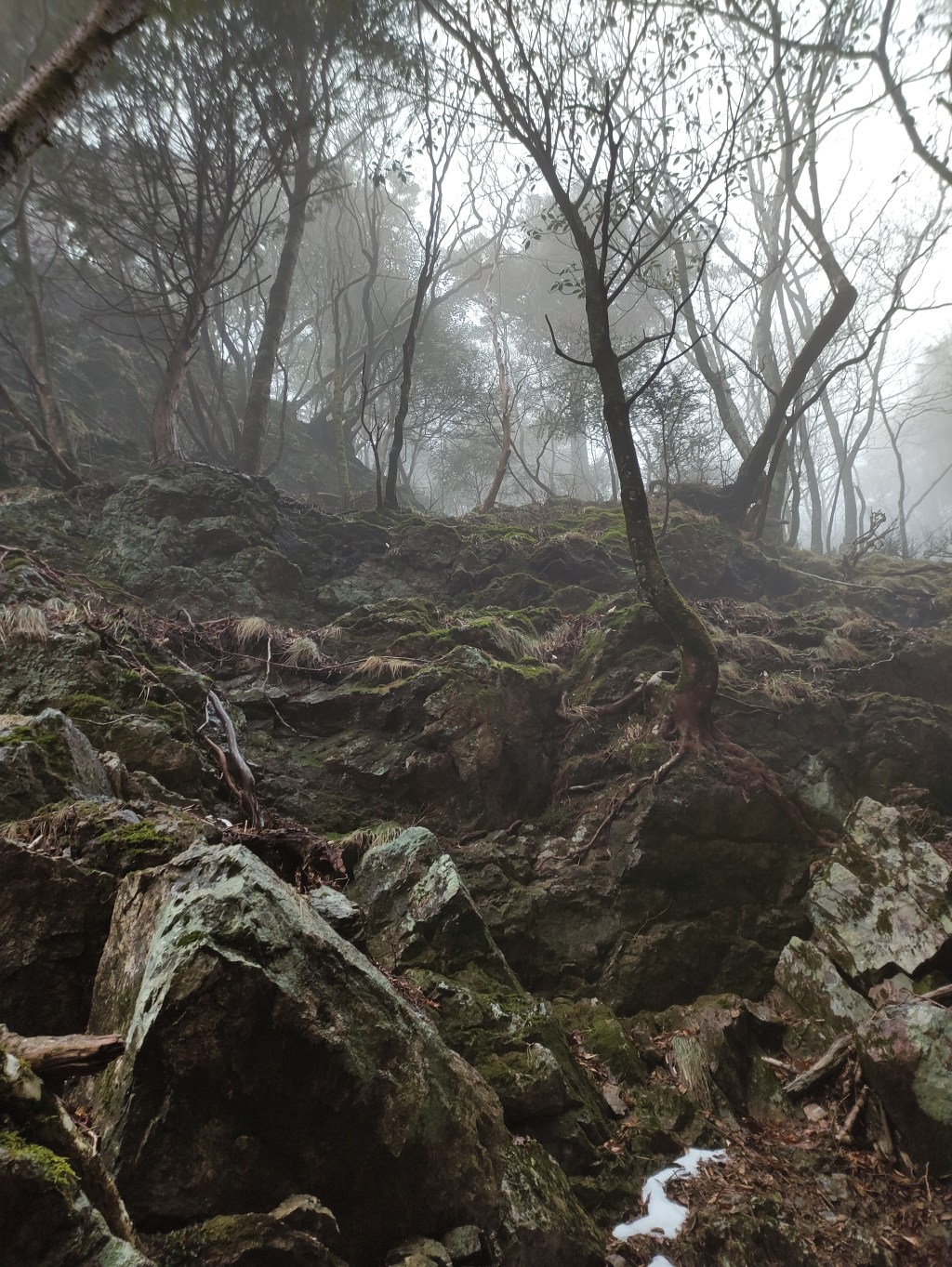
I slept in the car that night to get my hike in on the one day off I get a week. Driving into the campground which had been closed for winter and all amenities locked up. Guess who didn’t bring toilet paper. Luckily my body is an absolute machine and I was able to hold off any unwanted movements until the end of the day. I woke up that morning greeted by a cloudy sunrise which soon turned to a moody fog that engulfed the mountain. I smashed my onigiri and protein bar and headed up.

Thick fog cover set for a mysterious ambiance

The course starts with some soft inclines for about the first half hour with the lower 1000 meters consisting of primarily Sterwartia, Hemlock and Crepe Myrtle. I had never seen Sterwartia in the wild until this time, their strange angular almost geometric growing behaviour is truly unique and beautiful.

So the gentle saunter slowly morphs into higher angle ascents and descents until you come face with sheer face and you’ll ponder how these structures stand in an earthquake prone country.

A small shrine under the cliff face. Dripping and freezing water form small Yokai like figures along the sides of the alter.

Sneak down and along the side of the stone wall and be met with the scrambling section of the mountain.

After crawling up this section you’re greeted by Hinoki Cyrpress and a whole new spectrum of ground flora. Additionally some of the vertical sections are aided by iron ladders and walkways. Check out some of the roots on these absolute monsters.

After a few slips and close calls on snowy paths which could have lead to certain injury I reached the peak. With no view in site. But if you check out google there are photos of a panoramic view.

Peak of the mountain; the view totally obscured by fog

If you’re in Japan for Kokufu or Taikan-ten this mountain might be a little unpredictable with snow and ice, but if you have the gear and like an adventure I highly recommend it.