
Hasho, happa and How to Choose a Good Leaf Type
With so many variables to consider choosing a bonsai, it can be easy to overlook certain features which will help define a tree as it ages. Leaf type is one of these features and I’d like to share my thoughts on its importance and some tips on how to assess desirable qualities.
Perhaps you’ve run into a situation where the leaves on your tree still look out of proportion. The roots are finely ramified, you’ve dialed in your fertilization, and perfected timing of seasonal maintenance but the leaves aren’t the size you’d like; the design feels impossible to retain. It may be the case that your tree’s foliage size will not reduce significantly from training.
Leaf type, “Hasho [葉性]” in Japanese, refers to foliage characteristics. Even amongst single cultivars (unless propagated by cuttings) leaf type is as unique as a fingerprint and varies more with certain species. Nuances such as color, shape, internode and petiole length, bud behavior, coarseness, size, firmness, growth rate and hardiness are all qualities that vary within a species. It is generally difficult to improve these features so it is important to fully evaluate them before purchasing a tree. That being said, don’t be so picky that you end up with nothing.
Happa [葉っぱ] in Japanese refers to both leaves and needles.
Conifers
Generally, good leaf/needle features for conifers are said to be short, straight, and bright. With pines, selection is fairly straight forward and mostly requires choosing a species that back buds easily. Double flush pines such as black and red pines can have their needle size managed effectively using several methods including varying the timing of decandling in summer. For demonstration purposes I will cover various types of juniper foliage from around Kouka-en.
Junipers
For Junipers I feel that leaf type becomes more important around shohin and chuhin sizes and there is a little more flexibility with larger trees. Granted you don’t necessarily want a tight, compact, leaf on a big tree as it tends to look unnatural. On the other hand, leggy, or floppy foliage is difficult to work with and I find it never really has a refined feeling to it. I’ll try to avoid mentioning specific varieties as that’s a whole other rabbit hole with lots of information available online.
What I have found to be ideal for developing nice pads is a leaf that tends to grow flat and lateral out of the sides of the shoots. These also mound nicely once the shoot tip is cut or pinched. If you can acquire one that is like this you’ll see how the pads practically make themselves with very little maintenance. It’s easy to judge this. Just inspect a shoot or lignified section near the tip and see how the foliage protrudes from the branch.
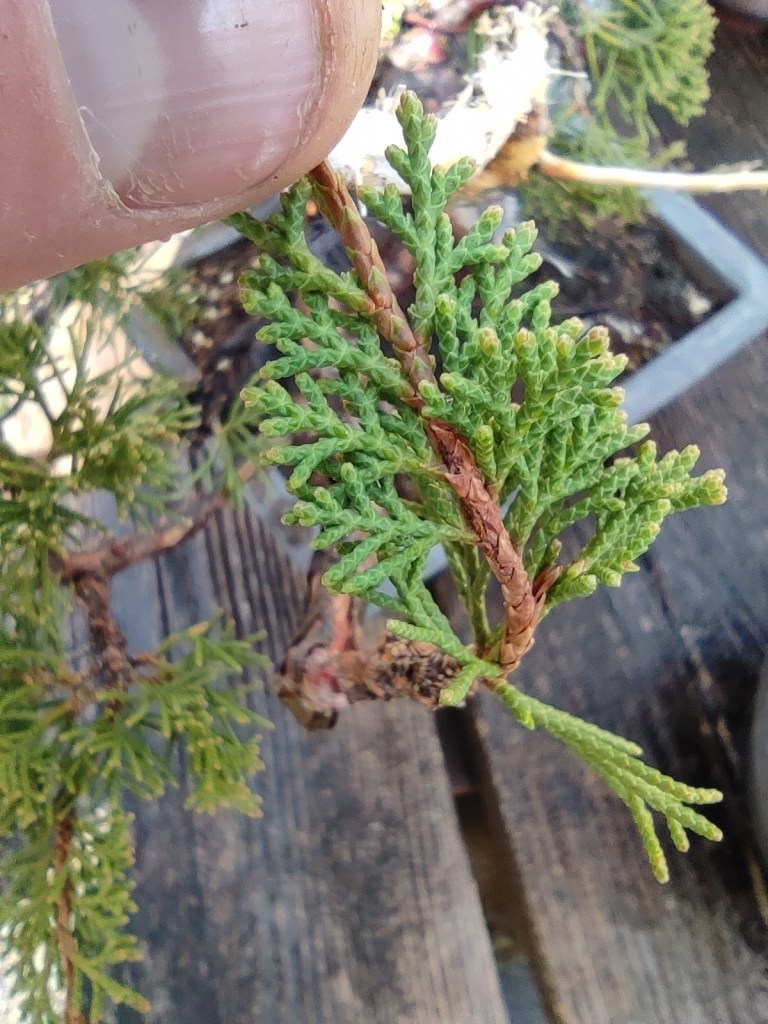
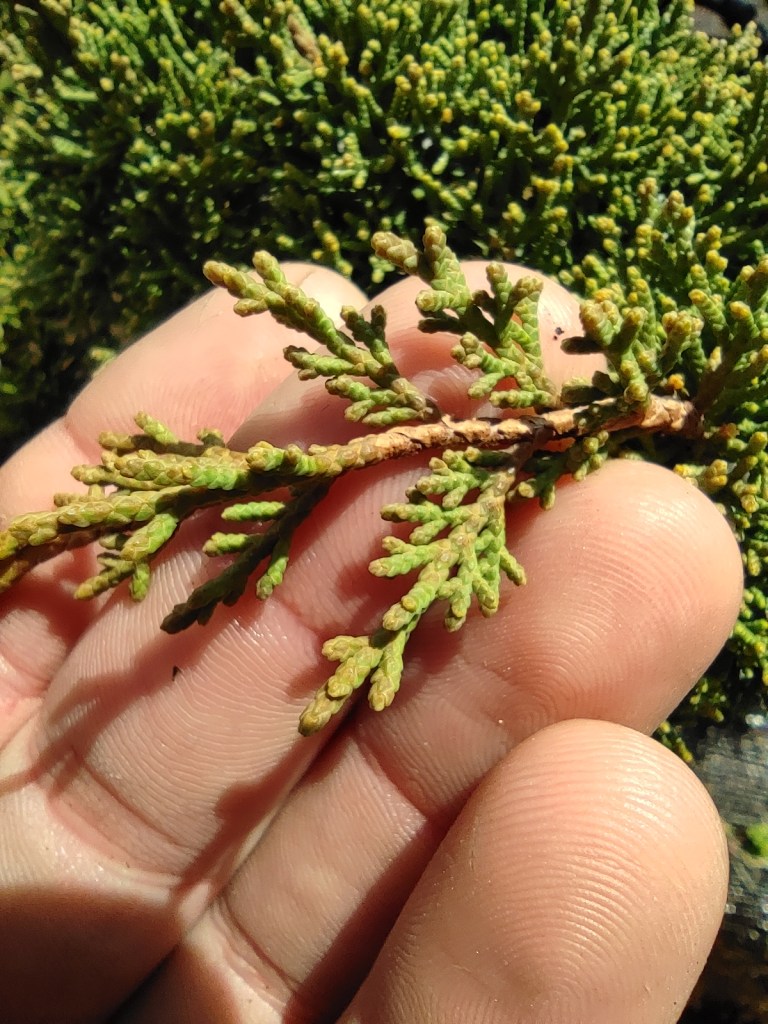
Leaf texture and color comes down to personal preference (actually all of this does!). Many may agree that if you have a soft elegant trunk, a variety with a softer appearance would be best. But if you have a more rugid, masculine tree a coarse, thicker leaf may be suitable.
In Japan, where the bonsai market has matured, enthusiasts rarely have to be concerned when buying a tree as the material has been cultivated for generations and poor material is generally, grafted, sold to other markets, disposed of or burned. In the west however, in many areas people are left with the options to create material out of garden center trees, fresh yamadori or growing from seeds they may or may not know the origin of. On that note, Juniperus Chinensis or Sabina stock at the garden center in San Francisco wasn’t propagated from the same cutting as the one up north in Toronto or over in Germany.
Deciduous
Ideal leaf features for deciduous trees are considered to be small, bright and consistent, with short internodes and appear beautiful in the growing seasons. Autumn color is also considered for many species. These qualities can only be determined in certain seasons so it’s best to know a bit of the history on a tree if possible before purchasing. It’s said that a deciduous tree with the right foliage will “grow itself” meaning that it will require very little intervention with wire or anything other than basic maintenance.
Maples
For purpose of clarity I’ll use Japanese Maple (Momiji) and Trident Maples as examples.


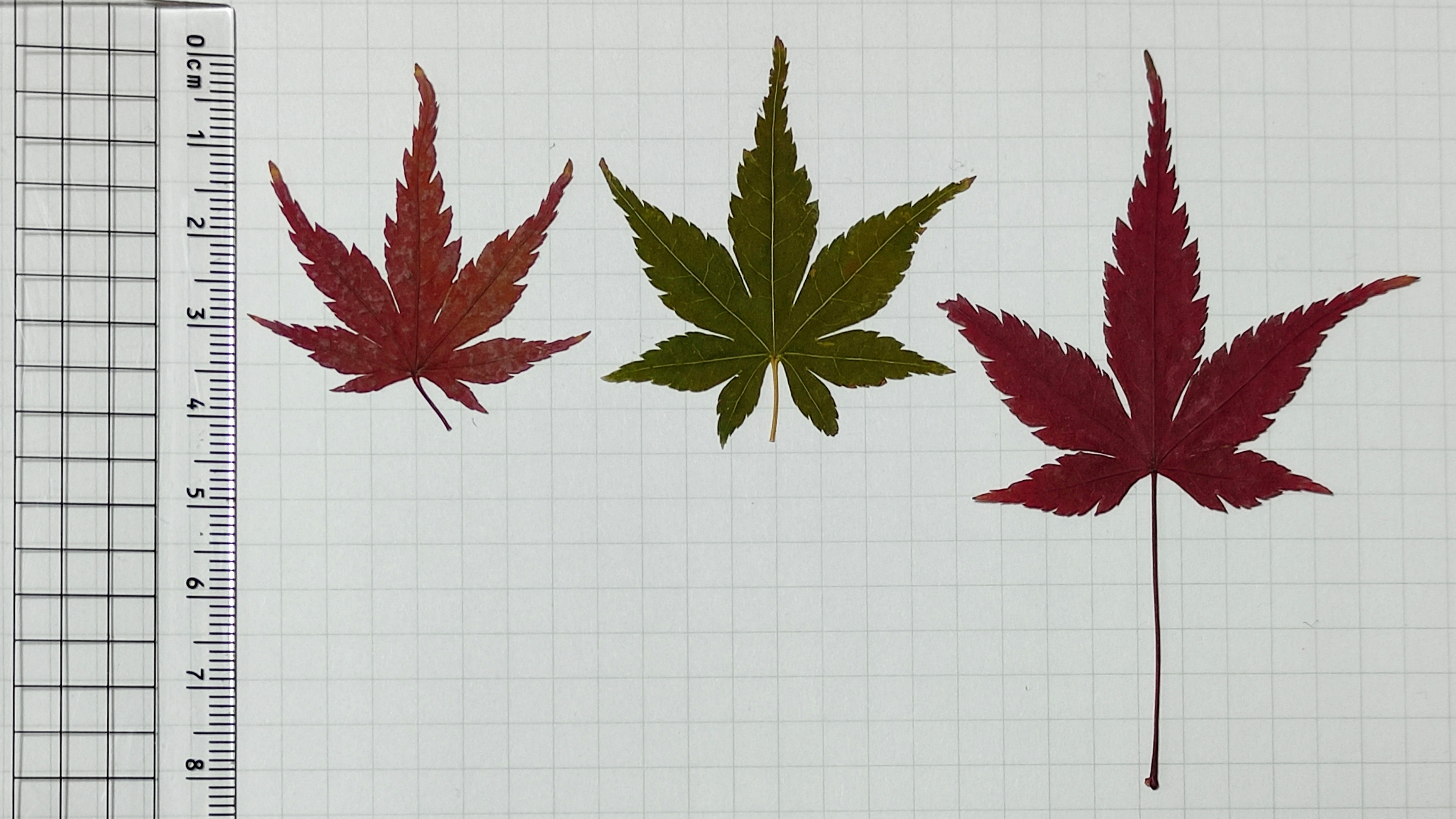
Left: Chuhin Ishitsuki Momiji above. Middle: Client’s large Bunjin Momiji. Right: Client’s large Arakawa (corkbark) Momiji
I find with Momiji, leaves around 4-6cm look very natural on larger trees while 4cm or less are ideal for chuhin or shohin sizes. Nice fall color is also ideal as the leaves can remain on the tree until falling. But if you enjoy mame size, then some varieties have leaves smaller than 1cm.
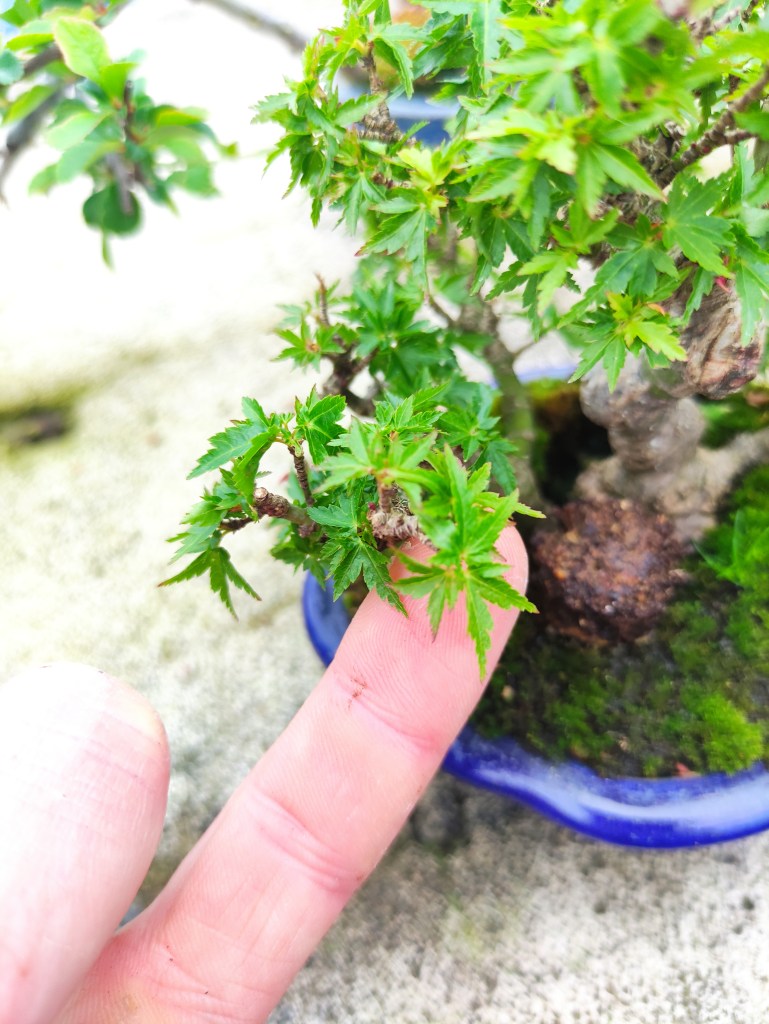
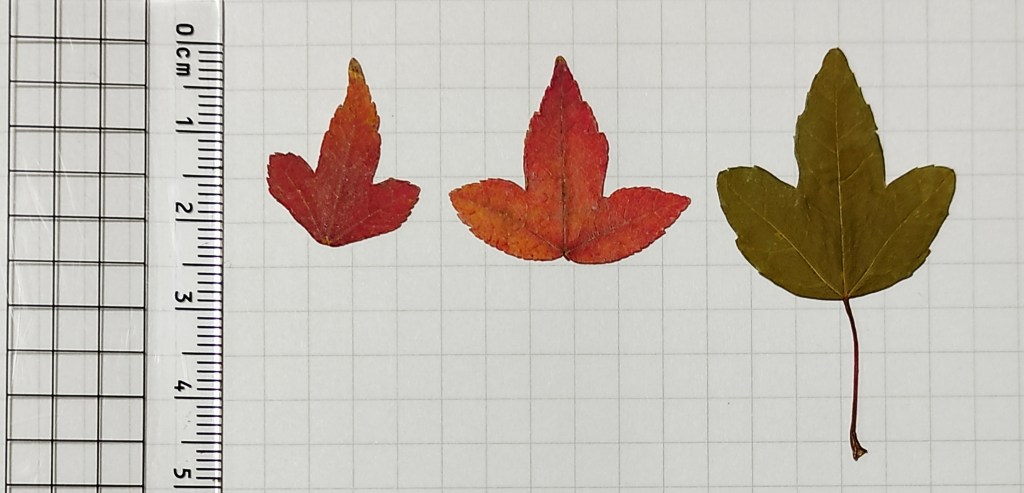
Trident Maples on the other hand can often naturally have leaves as small as 2cm which looks great and is easy to maintain on all but largest specimen. Additionally nice fall color is optional as it is good to remove the outer leaves mid autumn when the tree goes dormant to ensure the interior buds are not weak on more refined trees. That being said if there is an autumn bonsai show you’d like to enter a tree into then it would be a great benefit.
It is important to consider is the size of your leaf relative to the tree. Too small foliage on a large tree may feel off due to the unnatural scale. Conversely a small tree with larger foliage will have you constantly wrestling to maintain it’s shape, though such is the case with certain species.
For fruiting and flowering species this is less important than the type of flower and fruit but a finer leaf type can help with branch development. Grafting can be used to change foliage, fruit and flower types as well but I’ll save that for another post.
Depending where you are located you may have to compromise a bit on material. But I hope this article will help you decide what you’d like to grow next. Always keep in mind what you appreciate in a tree and choose accordingly. This is not rule, just something I think is worth considering. So don’t let it stop you from acquiring or developing something new.
 Bonsai Harmony
It’s amazing to see the variety of leaf/needle sizes and textures for the traditional Japanese species that have been used for so long. It makes me wonder if in a hundred years we will have such a variety of cultivars for native species of other countries if we keep experimenting with seed growing and yamadori of those less established species.
LikeLike
It’s amazing to see the variety of Japanese maple leaf colors and sizes. It makes me wonder whether after a couple hundred years of using native species of other countries if we will have as many established cultivars of those too!
LikeLiked by 1 person
Given how excited people are to grow their own in the west, I’m sure we will start to see such progress within our life times.
LikeLike